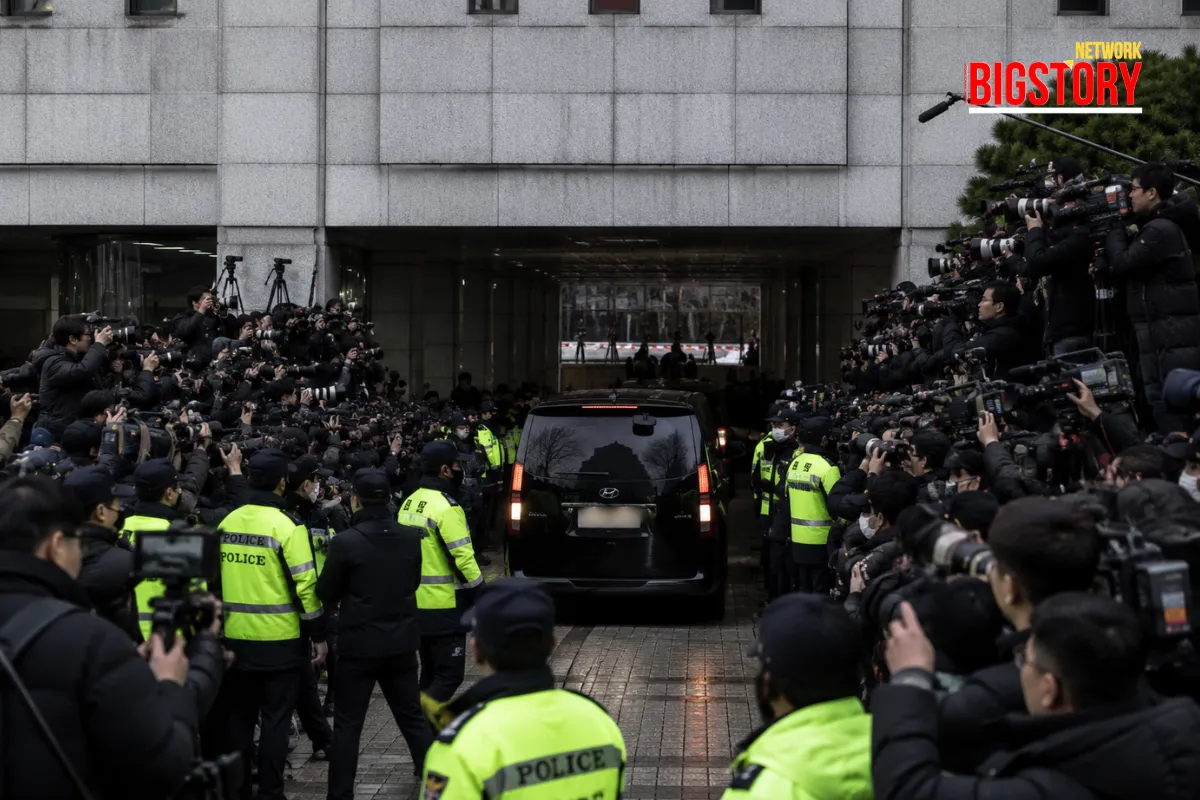
A Seoul court reveals the terrifying lengths South Korea’s former leader went to cling to power, convicting him of actively attempting to bait a nuclear-armed neighbor into a military clash to justify martial law.
 Sseema Giill
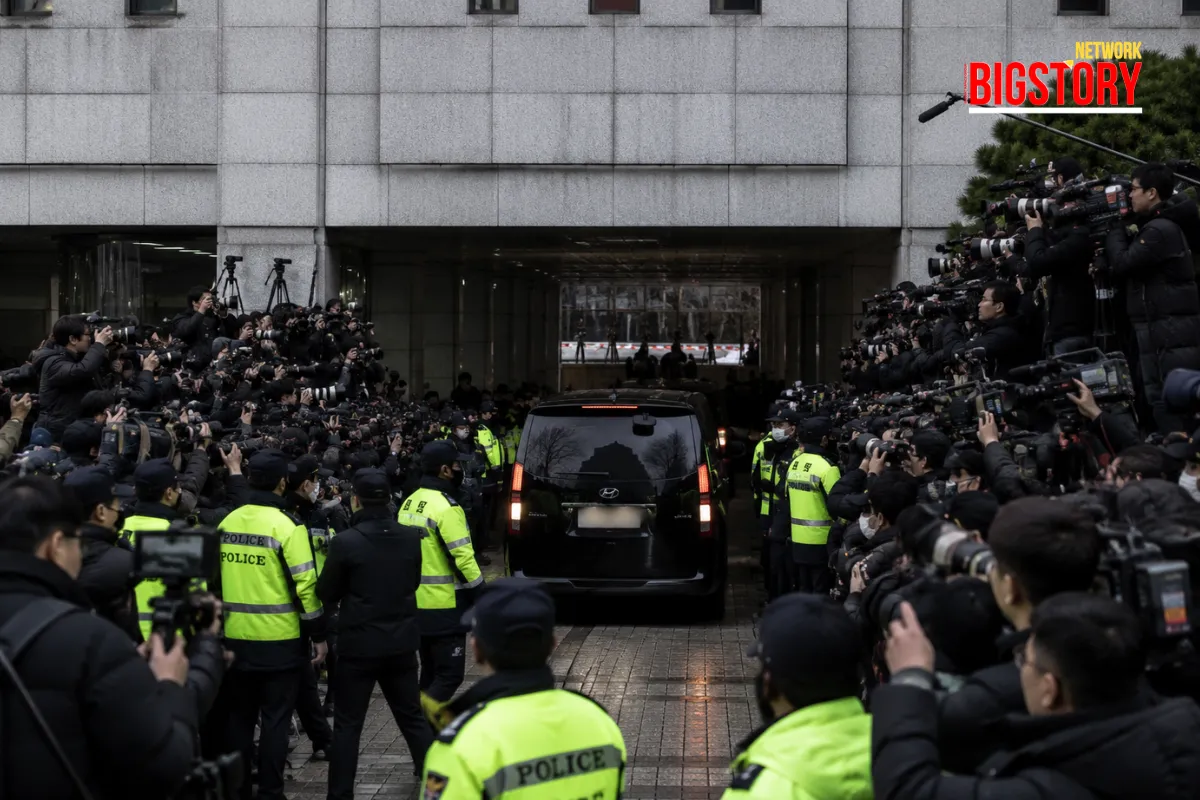
• What happened: A Seoul court has sentenced ousted South Korean President Yoon Suk Yeol and his former Defense Minister to 30 years in prison for ordering illicit military drone flights over North Korea in October 2024.
• Why it matters: The court explicitly ruled that Yoon deliberately sought to provoke an armed conflict with Pyongyang in order to manufacture a severe national security emergency—providing a direct pretext for his disastrous emergency martial law declaration two months later.
• The co-conspirators: Former Defense Counterintelligence Commander Yeo In-hyung was sentenced to 15 years, while former Drone Operations Command chief Kim Yong-dae received a suspended three-year sentence.
• The strategic play: The ruling exposes a chilling, unprecedented abuse of executive power, confirming that the highest levels of the South Korean government were willing to risk millions of lives in a war on the Korean Peninsula solely for domestic political survival.
• The aftermath: Yoon's legal team has appealed the verdict, arguing the flights were a legitimate response to trash balloons. Yoon remains in custody, where he is already appealing a separate life sentence for insurrection.
In a stunning and terrifying legal development, the full scope of South Korea's recent constitutional crisis has been exposed. On Friday, June 12, 2026, ousted former President Yoon Suk Yeol was handed a new 30-year prison sentence by the Seoul Central District Court.
The court convicted Yoon of orchestrating covert military drone infiltrations over North Korea, ruling that the former leader intentionally sought to provoke an armed conflict to manufacture a crisis that would justify his disastrous martial law declaration in December 2024. This monumental sentence is in addition to the life term Yoon is already serving for leading an insurrection.
The Seoul Central District Court found both Yoon and his former Defense Minister, Kim Yong-hyun, guilty of aiding an adversary and abusing their executive and military power. Both men received 30-year prison terms.
The judicial hammer also fell heavily on the military apparatus that executed the orders. Yeo In-hyung, the former head of the Defense Counterintelligence Command, was sentenced to 15 years in prison. Meanwhile, Kim Yong-dae, the former chief of the Drone Operations Command, received a three-year sentence, which was suspended for five years.
The charges are rooted in a highly classified operation from October 2024, during which South Korean military drones were flown directly into North Korean airspace over Pyongyang to drop propaganda leaflets.
According to the court's findings, this was not a routine intelligence mission. The judges explicitly ruled that Yoon and his defense minister conspired to use aggressive psychological warfare to actively incite North Korea into launching armed provocations. The ultimate goal was to manufacture a severe, undeniable national security crisis—a fabricated "wartime condition".
This manufactured threat was designed to serve as the ultimate, unassailable pretext for Yoon's subsequent declaration of emergency martial law on the night of December 3, 2024, an act meant to suppress his domestic political opposition and suspend civilian rule.
Yoon's legal defense team vehemently contested the ruling, arguing that the drone flights were a legitimate, proportional military response to North Korea's months-long campaign of sending thousands of trash-carrying balloons across the heavily fortified border. They have formally appealed the court's latest 30-year verdict.
While international observers have largely focused on the chaotic six hours of Yoon's failed martial law decree, the "Missed Angle" here is the terrifying realization of how close South Korea actually came to a manufactured war.
The court's findings completely shatter fundamental trust in the nation's military command structure. The ruling confirms that the highest levels of the South Korean government were actively attempting to bait a volatile, nuclear-armed North Korea into a military clash.
Yoon didn't simply abuse his executive power to rewrite domestic laws; he reportedly weaponized national security itself. By risking a retaliatory artillery or missile strike from Pyongyang, he actively endangered the lives of millions of citizens living in the densely populated Seoul metropolitan area. He was willing to trigger a devastating regional conflict solely to create a smoke screen for neutralizing his political rivals and clinging to power—redefining the absolute limits of political survival in modern democracies.
• Seoul Central District Court: Official Judicial Rulings, Court Summaries, and Sentencing Transcripts
• The Korea Herald: National Security Desks, Legal Proceedings, and Political Turmoil Coverage
• Reuters: Asia-Pacific Political Crises, South Korea Insurrection Updates, and Inter-Korean Relations
• The Guardian: World News Bureau, Yoon Suk Yeol Trial Coverage, and Global Diplomatic Reactions
 Exclusive Content






Sign up for the Daily newsletter to get your biggest stories, handpicked for you each day.



 Trending Now! in last 24hrs